
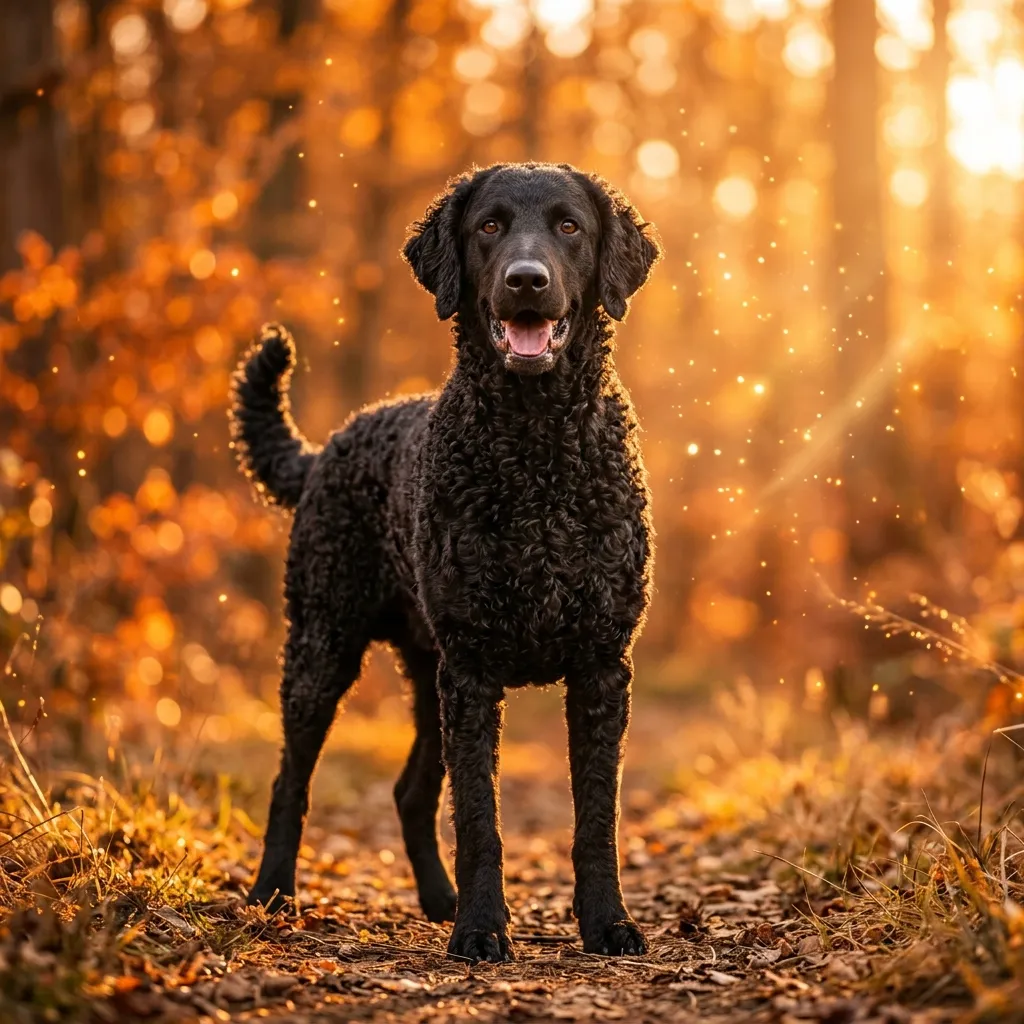
Curly-Coated Retriever
Country of Origin: England
The Curly-Coated Retriever temperament is a unique blend of tireless working drive and quiet, dignified independence. Unlike the universally exuberant Golden or Labrador Retrievers, the Curly is more reserved, serious, and aloof. They are profoundly loyal and affectionate with their own families, often bonding closely with one person, but they are naturally cautious and aloof with strangers. This makes them excellent, discerning watchdogs. They are highly intelligent, independent thinkers who can easily become bored with repetitive training; they require a confident owner who uses varied, positive reinforcement methods. A Curly thrives when given a challenging job and matures slowly, often retaining a playful, puppy-like energy well into adulthood. Early, extensive socialization is essential to ensure their natural reserve doesn't become shyness.
Curly-Coated Retriever health and care are generally straightforward, as they are a sturdy, athletic working breed. However, they can be susceptible to certain genetic conditions, including hip dysplasia, eye issues (like progressive retinal atrophy), and certain types of cancer. Responsible breeders screen for these issues. Their defining feature—the coat of tight, crisp curls—requires unique maintenance. It should not be brushed or combed, as this will cause the hair to frizz. Instead, it should be occasionally scissored to maintain shape, and wiping them down with a damp cloth is usually sufficient to keep them clean. They are a highly athletic breed that requires substantial daily, vigorous exercise. They need long runs, rigorous hikes, and, ideally, frequent opportunities to swim and retrieve.
The Curly-Coated Retriever history marks it as one of the oldest of the retriever breeds, developed in England during the late 18th and early 19th centuries. English gamekeepers needed a robust, tireless dog capable of retrieving waterfowl in icy, punishing conditions, and upland game in dense, thorny cover. To create this ultimate multi-purpose hunter, they likely crossed the now-extinct English Water Spaniel, the retrieving setter, and the St. John's Water Dog (ancestor of the Labrador). Later, crosses with the Poodle were introduced to perfect their unique, defining feature: a dense, water-resistant coat of crisp, tight curls that acts as armor against briars and icy water. Highly prized by hunters for their endurance and intelligence, the "Curly" remains a capable, enduring sporting dog.
Is the Curly-Coated Retriever the right dog for you? This breed is best suited for active, experienced dog owners who understand the needs of a serious, independent working dog. They are an excellent choice for hunters, outdoor enthusiasts, or those involved in canine sports. They are not recommended for novice owners, apartment living, or those seeking a highly social, "everybody's friend" type of dog. They require an owner who can provide extensive daily physical exercise and engaging mental stimulation to prevent boredom and destructive behavior. If you appreciate a highly intelligent, intensely loyal, and slightly reserved companion, and you have the active lifestyle to keep them challenged, the Curly-Coated Retriever is a magnificent partner.
Detailed Category Evaluation
Compare Curly-Coated Retriever with Similar Breeds
See how Curly-Coated Retriever stacks up against other Sporting and Medium dogs in size, barking and temperament.
 Medium
VS
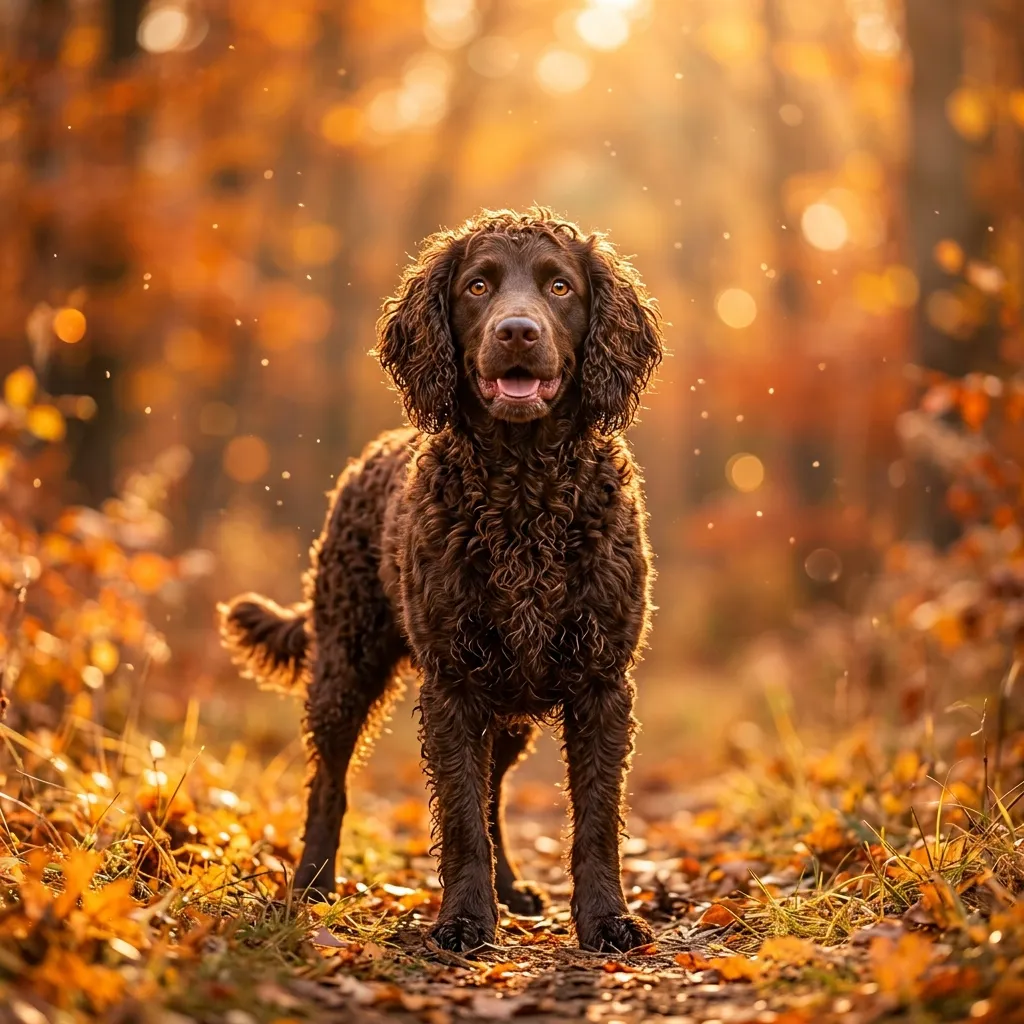
American Water Spaniel
Sporting Group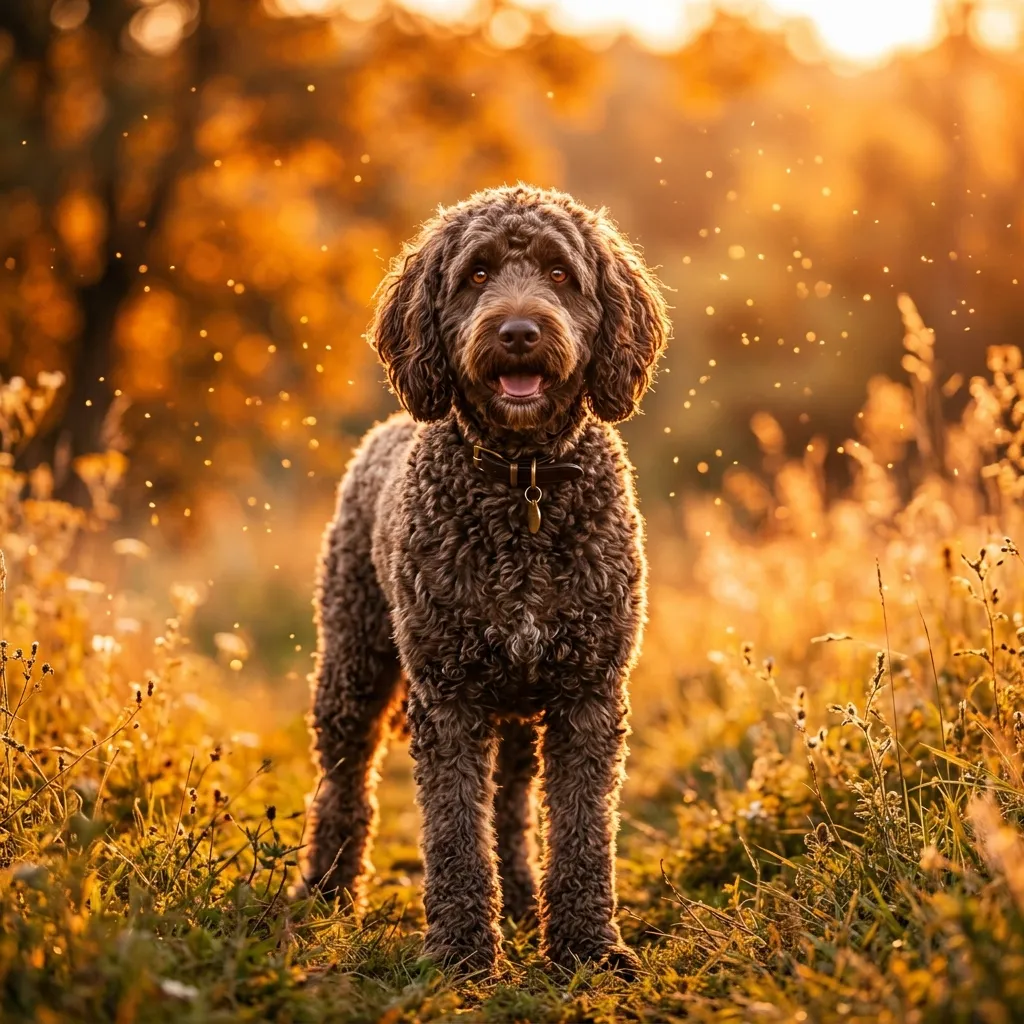 Medium
VS
Barbet
Sporting Group Medium
VS